



Professor Marian Holness – The Trinity Cobbles, a Story of Plate Tectonics
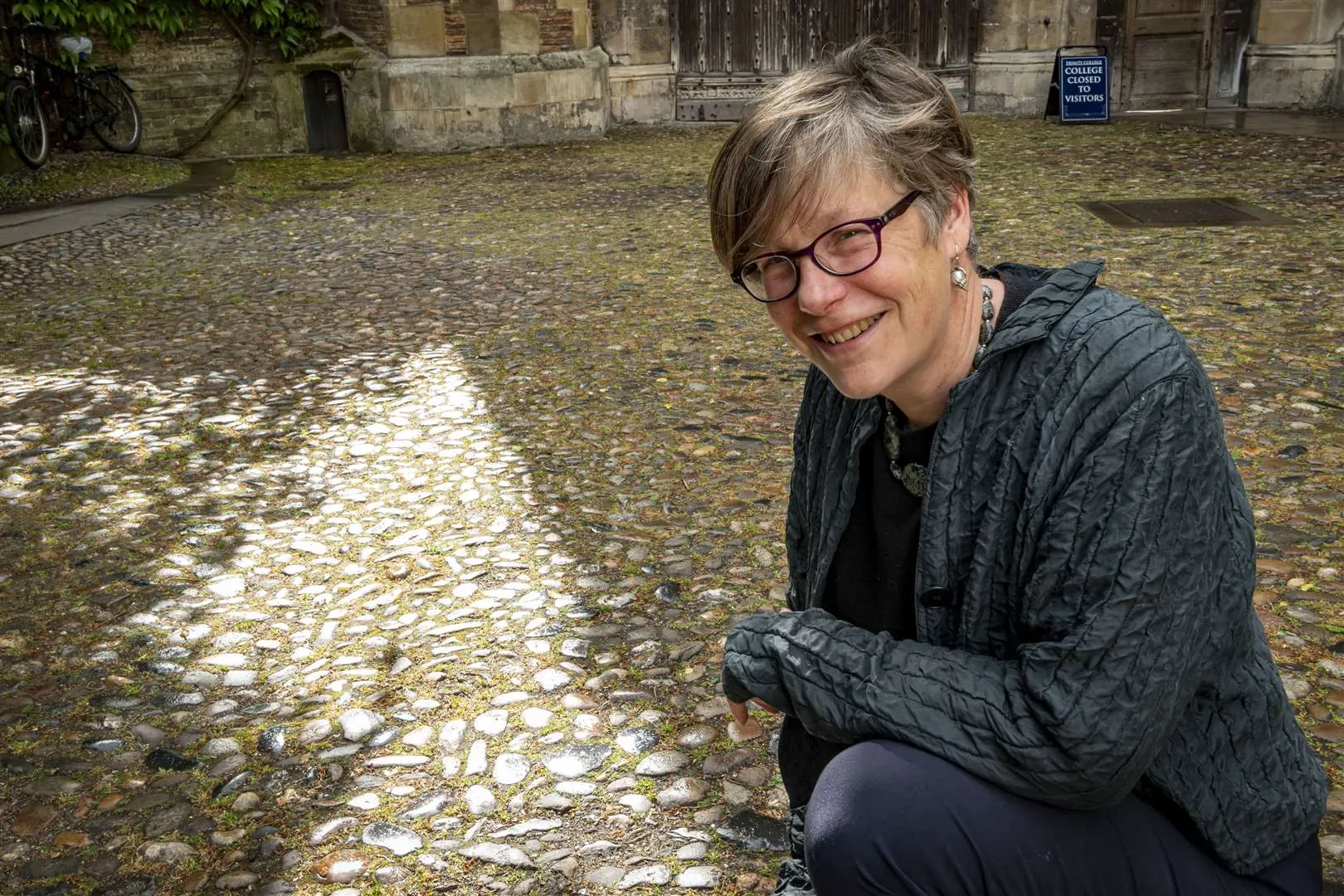
The cobbled area outside the Great Gate of Trinity College may seem very ordinary to the casual observer, but it can tell a number of fascinating stories. Firstly, it is an excellent example of the oldest building materials in the Cambridge area, formed of stones that were dug out of the surrounding fields in order to facilitate ploughing. This “field stone” was used for building until the Black Death, so is now found only in the oldest churches in the region. It was also used for making roads and, due to its durability and cheapness, has commonly been recycled many times: the Great Gate cobbles, for example, were re-purposed in the sixteenth century from an ancient road. Even a cursory examination of the cobbles shows a huge variety of different rock types – this is because the stones in the Cambridgeshire fields were deposited from glaciers and brought by the ice from hundreds of miles away. Amongst these different rock types are lithologies that can only have been brought from Norway, so we can use their distribution to map out the flow-lines of the long-departed glaciers. In the talk, I will introduce the various rock types and explain how they formed and what we can deduce about Earth history