Coldham’s Common Local Geological Site
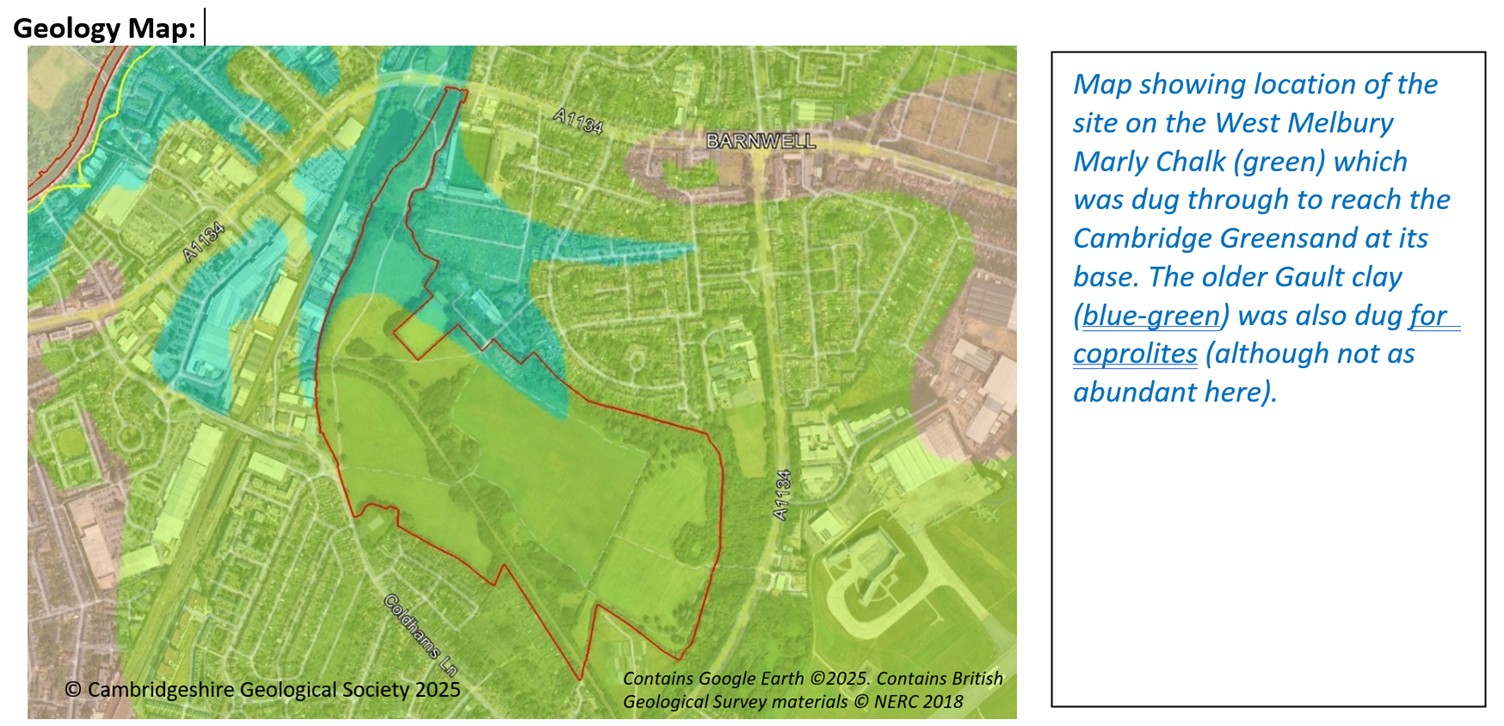
The site was a major area of coprolite (phosphate) mining in the 19th century. Phosphate nodules were dug from the Cambridge Greensand, a very localised stratum, present only in north Hertfordshire and Cambridgeshire. It lies at the base of the West Melbury Marly Chalk, itself the lowest, and oldest, formation within the Chalk. The site represents an extensive area where the stratum is near the surface.
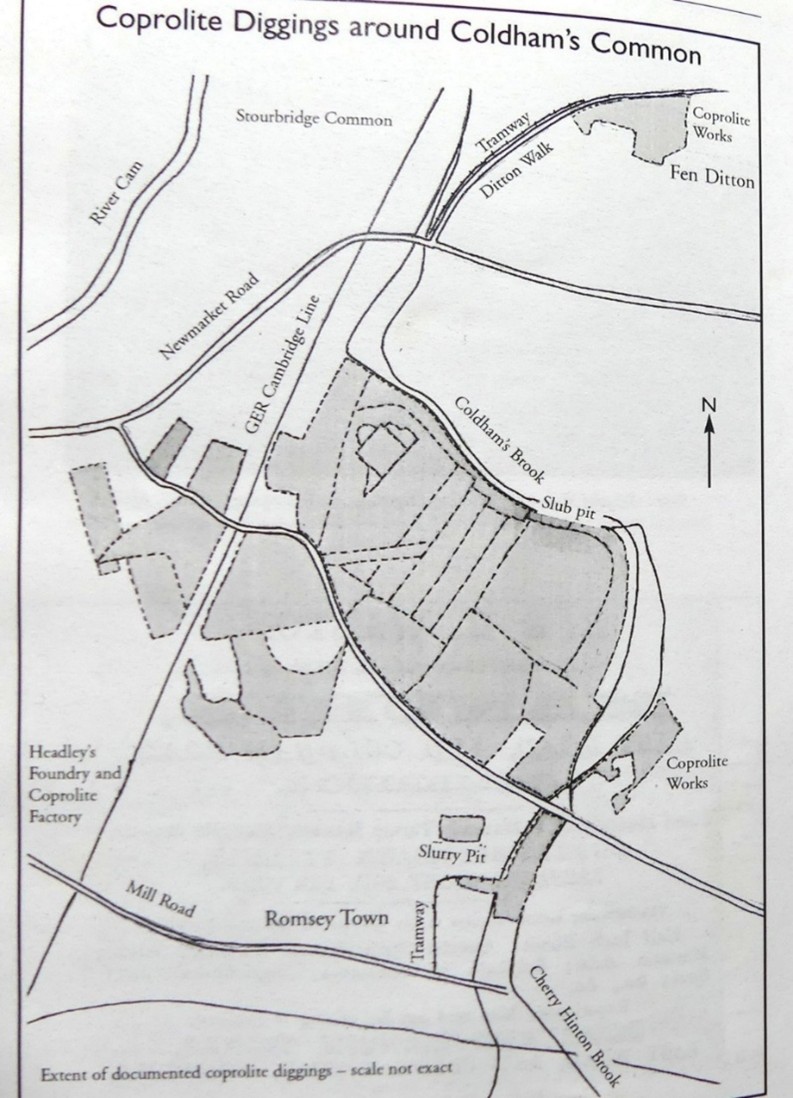
Coprolite mining took place over most of the Common during mid 19th century with surrounding areas used for the coprolite works (see map of historic workings). The site was one of the first in Cambridge to be dug for coprolites and several notable parties invested in it, including the Cambridge Corporation. Works started in December 1954 in the middle of the Common and then expanded to cover most of the site. The brook running along the edge would have provided water for the washing process.
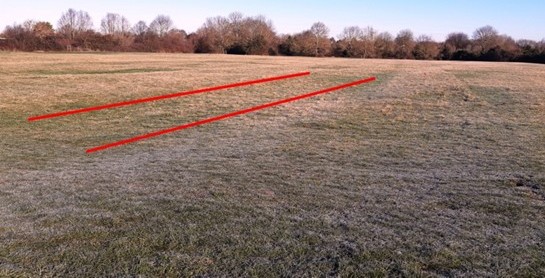
Clearly visible evidence of coprolite strip mining (undulating ground with a series of linear ridges) still remains in several parts of the Common. In other areas larger pits were dug.
The phosphate nodules (‘coprolites’) are concretions containing calcium phosphate. They are mostly casts of the interior of marine animals, including fish and bivalves, having formed around the remains of animals (and some plants). Originating in the underlying Gault clay, they were eroded and concentrated in the Cambridge Greensand.They also occur in the Gault clay, but are less abundant.
The site was known for its abundant fossils found in the Greensand, including many pterosaurs. Significant fossils include Macrurosaurus semnus, a large dinosaur. dinosaur fossils are rare in Cambridgeshire as the area was mostly marine during the Jurassic and Cretaceous Periods. Many of the fossils are in the Sedgwick Museum of Earth Sciences and there are references to them in some papers, particularly those by H G Seeley (e.g. 1869), who wrote about the local finds of many fossils such as pterosaurs (Dragons of the air, 1901).
Coprolites were mined extensively in southern Cambridgeshire, leaving distinctive areas of patterned ground. Many were dug along the outcrop of the Cambridge Greensand (the rest from the Woburn Sands e.g. at Gamlingay and Stretham). As most of the common is open access and located near the centre of the city, it provides educational opportunities to learn about the city’s industrial history, unlike other coprolite areas in Cambridge, which are now developed. See Sedgwick Museum/History Works video.
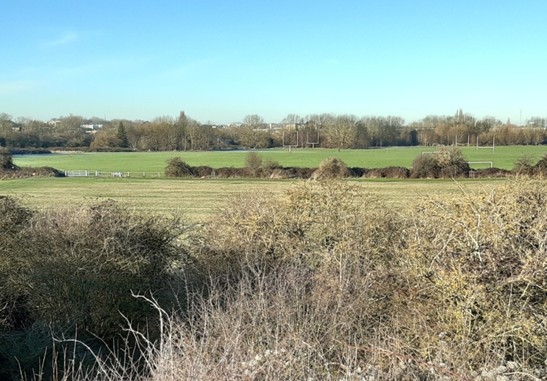
The hollow in which the site lies (as shown by the southerly detour of the 10m contour reaching to what was Hinton Moor) was created by freeze-thaw (thermokarst) processes during the last glaciation. About 20,000 years ago, it contained a large lake where water from Cherry Hinton Brook built up behind a barrier formed by the ridge of River Terrace Gravels to the north (Boreham, S, 1996 Nature in Cambridge). The hollow forms a distinct landscape feature in the city.